Guide
How to Choose a Sofa
The four things underneath the fabric that decide whether a sofa is still good in ten years, the measurements that matter more than the length, and how to check it fits.
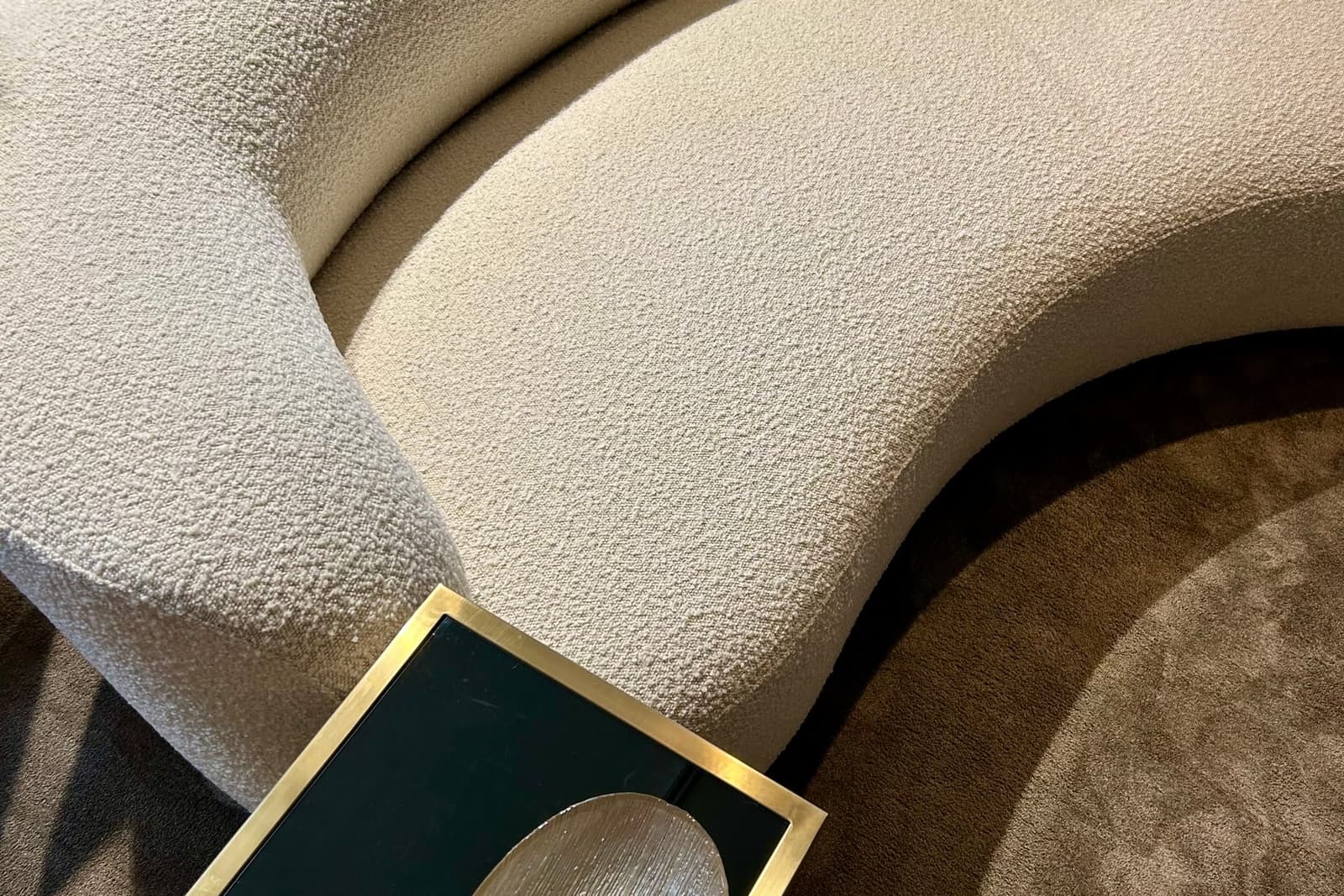
A sofa is the most expensive thing most people buy for a room and the hardest to judge in a shop, because everything that decides whether it will still be good in ten years is hidden under the fabric. You can sit on two sofas that feel identical in a showroom, and one of them will be flat and sagging in three years.
So the questions worth asking are not about the colour.
The frame
This is the thing nobody sees and everything rests on.
What you want is kiln-dried hardwood, joined with dowels, screws and glue, and usually with corner blocks. Kiln-dried matters because wood that still holds moisture shrinks as it dries out in a warm flat, and a shrinking frame loosens every joint in it.
What you do not want is particleboard, or a softwood frame held together with staples. It will be fine for a while and then it will not, and a broken frame is not economically repairable.
Shops that use good frames will tell you, usually in the product description and often proudly. Shops that say nothing at all about the frame are generally not hiding good news.
The suspension
Between the frame and the cushions there is something holding you up. In rough order of quality:
- Eight-way hand-tied springs. Coil springs tied by hand in eight directions. The traditional method, the most comfortable, the most expensive, and increasingly rare.
- Sinuous springs, also called serpentine. S-shaped steel wires running front to back. The standard on most decent sofas and perfectly good.
- Webbing. Elastic straps. Light and cheap, and it is the one that goes slack first. Fine on a small occasional sofa, less so on the one you sit in every evening.
If a listing does not say, it is usually webbing.
The cushions
Three broad options, and the differences show up over years rather than in the shop.
All foam holds its shape indefinitely and never gets softer. Density is what matters, and it is rarely published; a useful proxy is weight, because a light cushion is a low-density one.
All feather or down is the most comfortable thing to sit in and needs plumping daily. Skip a week and it looks like nobody has loved it in years.
Foam core wrapped in feather is the compromise almost every good sofa uses now, and the one I would choose. It keeps its edges and still gives when you sit down.
Back cushions are usually fibre, which flattens. Ones with zips you can open and refill are worth looking for.
The measurements that actually matter
Everyone measures the overall length. It is the least important number here.
- Seat depth, front edge to the back cushion. 55 to 60cm for sitting, more for lounging. This decides how the sofa feels more than anything else.
- Seat height, floor to the top of the seat cushion. Around 42 to 45cm suits most people. Lower is harder to get out of, higher feels like a bench.
- Back height. Whether your head is supported or not, and whether the sofa blocks the view across a room. A low back makes a small room feel bigger and a long evening less comfortable.
- The arms. Two sofas of the same overall width can differ by 30cm of usable seat, because wide rolled arms eat it. If you like lying down on a sofa, arm height matters more than arm looks.
Sit on it properly in the shop. Not perched, the way everyone does. Sit back, feet on the floor, for a few minutes.
The fabric
Two numbers and one habit.
The rub count, usually Martindale in Europe, tells you how the fabric survives abrasion: 20,000 and up is fine at home, 30,000 and up is comfortable. It says nothing about pilling, fading or water marking, so ask about those separately if the fabric is pale or the room is sunny.
Removable covers turn an irreversible decision into a replaceable part. If you have animals or children or intend to keep the sofa a long time, pay for them, and check whether they are washable or dry-clean only.
The habit: order swatches, and keep them in the room for a week. Fabric colour under showroom lighting is not fabric colour in your living room in February.
Measure the route before you order
The most avoidable disaster in furniture. A sofa that does not fit goes back on the van and the delivery charge does not.
Measure the narrowest point of the whole route in, and remember the tight spot is almost never the front door. It is the turn at the top of the stairs, the corner in the hallway, the lift. A sofa goes through a doorway on its side, so compare the doorway against the sofa’s depth and height, not its length.
Then ask the shop three questions: what are the packed dimensions, do the legs come off, and do the arms detach. A sofa that comes apart will go almost anywhere. One that does not might not make it past your stairs, and it is much better to find that out before it is made.
What I would spend on, in order
If the budget will not stretch to everything: frame first, then suspension, then cushion fill, then fabric. That is the reverse of the order they are presented to you in, and it is the order in which they fail.
Common questions
- How deep should a sofa be?
- Seat depth, measured from the front edge to the front of the back cushion, is the number that decides how it feels. Around 55 to 60cm suits most people sitting upright with their feet on the floor. Over about 65cm and you are in lounging territory, which is wonderful for a film and uncomfortable for a conversation, and shorter people end up needing a cushion behind them to reach the back at all.
- What is a Martindale rub count and what number do I need?
- It is a measure of how many cycles a fabric survives in an abrasion test before it fails. For a sofa in normal domestic use, 20,000 and up is fine and 30,000 and up is comfortable. Far higher numbers are aimed at offices and bars. It only measures abrasion, so it tells you nothing about whether a fabric will pill, fade in sunlight or mark with water.
- Are feather cushions worth it?
- They are the most comfortable and the most work. A foam core wrapped in feather is the usual compromise and the one I would pick: it holds its shape but still gives. All-feather cushions need plumping every single day or they look collapsed, and all-foam holds its shape but never quite softens.
- Will it fit through my door?
- Measure the narrowest point on the whole route, not the doorway. The tight spot is usually a turn at the top of the stairs or a corner in a hallway. Compare it against the sofa's depth and its height, since a sofa goes through a door on its side. Ask the shop for the packed dimensions, whether the legs come off and whether the arms detach, and ask before you order rather than after.
- How long should a sofa last?
- A kiln-dried hardwood frame with sprung suspension should be good for fifteen to twenty years, and the cushions and fabric will give out long before the frame does, which is the point. A stapled softwood or particleboard frame is doing well to reach five. This is why the frame is worth asking about even though you will never see it.
- Are removable covers worth paying extra for?
- Yes, if you have children or animals or plan to keep it a long time. It turns the fabric from a permanent decision into a replaceable part, and it means a spill is a wash rather than a disaster. Check whether the covers are washable or dry-clean only, because the second one quietly cancels most of the benefit.